
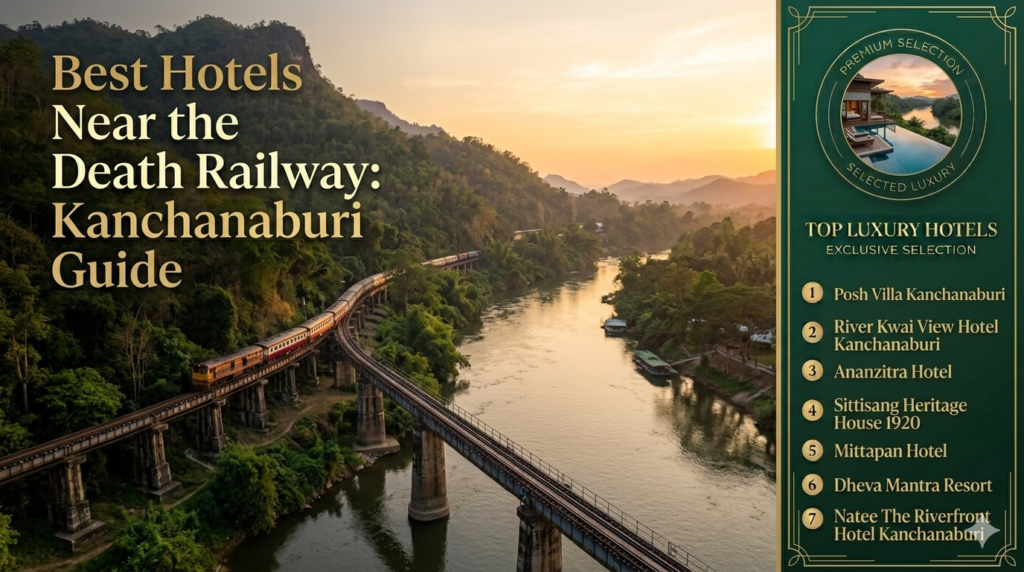
Meta Description: Discover where to stay near the Death Railway in Kanchanaburi with seven hotels, historic landmarks, train travel tips, cultural advice, and nearby attractions.
Table of Contents
- Introduction
- Featured Snippet
- Understanding the History of the Death Railway
- Best Areas to Stay in Kanchanaburi
- 7 Best Hotels Near the Death Railway
- Must-Visit Landmarks Along the Route
- Cultural Experiences and Local Attractions
- Essential Travel and Safety Tips
- Best Time to Visit and Transportation
- Frequently Asked Questions
- Conclusion
- Related Posts
Introduction
The Death Railway is one of Kanchanaburi’s most important historical attractions, offering international travelers an opportunity to learn about one of the darkest chapters of World War II in Thailand. Built during the Japanese occupation of Southeast Asia, the railway connected Thailand with Burma and was constructed under extremely difficult and deadly conditions.
Today, sections of the railway remain in operation, allowing visitors to experience part of the historic route by train. The surrounding area also contains museums, war cemeteries, memorials, riverside restaurants, and scenic countryside.
Choosing where to stay near the Death Railway makes it easier to explore these important sites without rushing. Kanchanaburi offers everything from modern city hotels and riverside properties to heritage houses and upscale resorts.
This guide highlights seven accommodation options while covering the history of the railway, major landmarks, transportation, cultural etiquette, and practical tips for planning a meaningful Kanchanaburi journey.
Featured Snippet
The best places to stay near the Death Railway are located around Kanchanaburi city, the River Kwai Bridge, and the surrounding riverside districts. Travelers can choose River Kwai View Hotel for convenient access to the bridge, Sittisang Heritage House 1920 for historic character, or Dheva Mantra Resort for a more luxurious riverside retreat.
Understanding the History of the Death Railway
The Death Railway was constructed during World War II as part of a Japanese military strategy to establish a land route between Thailand and Burma.
Construction began in 1942 and involved Allied prisoners of war alongside large numbers of Asian forced laborers. Workers faced extremely harsh conditions, including disease, inadequate food, exhaustion, dangerous terrain, and limited medical care.
The railway became infamous because of the enormous number of people who died during its construction.
The Bridge over the River Kwai is one of the best-known sections of the railway. Although popular culture has helped make the bridge famous around the world, visiting the wider historical sites helps provide a more complete understanding of the human cost of the project.
Today, tourists can walk across the bridge, visit museums and cemeteries, and ride sections of the surviving railway.
Best Areas to Stay in Kanchanaburi
River Kwai Bridge Area
Staying close to the bridge is ideal for travelers whose primary interest is wartime history.
You will be close to the bridge, museums, memorials, and riverside restaurants.
Best For: History enthusiasts, first-time visitors, couples, and photographers.
Kanchanaburi City Center
The city center offers more restaurants, shops, markets, and transportation options.
Best For: Families, independent travelers, budget-conscious visitors, and longer stays.
Riverside Kanchanaburi
Riverside accommodation provides a peaceful environment after a full day of historical sightseeing.
Best For: Couples, luxury travelers, nature lovers, and visitors seeking relaxation.
7 Best Hotels Near the Death Railway
1. Posh Villa Kanchanaburi
Location: Kanchanaburi.
Highlights: Posh Villa Kanchanaburi offers a stylish and comfortable accommodation experience for travelers exploring the historical attractions of the province.
Its villa-style setting provides a peaceful place to relax after visiting museums, memorials, and the railway.
Best For: Couples, families, groups, and travelers seeking modern comfort.
Nearby Attractions: Death Railway, River Kwai Bridge, museums, and local restaurants.
Why Stay Here: It provides a comfortable modern base while keeping the major historical attractions within convenient reach.
2. River Kwai View Hotel Kanchanaburi
Location: Near the River Kwai.
Highlights: River Kwai View Hotel Kanchanaburi is particularly suitable for travelers who want to stay close to the famous bridge and riverside area.
The location makes it easy to organize early visits to the railway and nearby historical sites.
Best For: History lovers, couples, families, and first-time visitors.
Nearby Attractions: River Kwai Bridge, Death Railway, museums, memorials, and riverside restaurants.
Why Stay Here: Its location provides convenient access to one of Kanchanaburi’s most important historical landmarks.
3. Ananzitra Hotel
Location: Kanchanaburi.
Highlights: Ananzitra Hotel provides a modern and comfortable accommodation option for visitors exploring Kanchanaburi’s history and natural attractions.
Its practical location allows travelers to combine sightseeing with access to restaurants and everyday services.
Best For: Couples, business travelers, solo visitors, and short stays.
Nearby Attractions: Death Railway, River Kwai Bridge, Kanchanaburi city, and local cultural sites.
Why Stay Here: It offers a convenient urban base for travelers who plan to spend most of their time exploring.
4. Sittisang Heritage House 1920
Location: Kanchanaburi historic area.
Highlights: Sittisang Heritage House 1920 provides an accommodation experience with a strong connection to the region’s heritage and traditional character.
Its historic atmosphere complements a trip focused on Kanchanaburi’s wartime history and cultural identity.
Best For: History enthusiasts, couples, photographers, and cultural travelers.
Nearby Attractions: Death Railway, River Kwai Bridge, local museums, and historic neighborhoods.
Why Stay Here: The heritage atmosphere adds another dimension to a history-focused Kanchanaburi visit.
5. Mittapan Hotel
Location: Kanchanaburi.
Highlights: Mittapan Hotel offers a practical accommodation choice for travelers who want easy access to the city’s attractions and regional roads.
It is especially suitable for visitors using Kanchanaburi as a base for multiple excursions.
Best For: Families, road-trippers, couples, and budget-conscious travelers.
Nearby Attractions: Death Railway, River Kwai Bridge, Kanchanaburi city, and nearby attractions.
Why Stay Here: It provides a straightforward base for exploring both historical sites and the wider province.
6. Dheva Mantra Resort
Location: Riverside Kanchanaburi.
Highlights: Dheva Mantra Resort offers a more luxurious experience within peaceful landscaped surroundings.
The resort-style atmosphere provides a relaxing contrast to the emotionally significant historical sites found throughout the region.
Best For: Couples, luxury travelers, families, and visitors seeking relaxation.
Nearby Attractions: Death Railway, River Kwai Bridge, riverside attractions, and historical museums.
Why Stay Here: It gives travelers a refined retreat where they can relax after a day of exploring Kanchanaburi’s history.
7. Natee The Riverfront Hotel Kanchanaburi
Location: Kanchanaburi riverside.
Highlights: Natee The Riverfront Hotel offers modern accommodation in a scenic riverside environment.
The waterfront setting is particularly pleasant in the evening after visiting the railway and nearby museums.
Best For: Couples, families, business travelers, and independent visitors.
Nearby Attractions: Death Railway, River Kwai Bridge, Kanchanaburi city, restaurants, and museums.
Why Stay Here: It combines contemporary comfort with the relaxing atmosphere of the River Kwai.
Must-Visit Landmarks Along the Route
Bridge over the River Kwai
The bridge is the most recognizable landmark associated with the Death Railway.
Visitors can walk across the structure and watch trains traveling along the surviving railway line.
Kanchanaburi War Cemetery
This important memorial site commemorates prisoners of war who died during the railway’s construction.
Visitors should behave quietly and respectfully while walking through the grounds.
Thailand–Burma Railway Centre
The museum provides detailed historical information about the railway, its construction, and the people who were affected by it.
It is an excellent place to visit before or after seeing the bridge.
JEATH War Museum
This museum provides additional historical context and displays relating to the wartime period and prisoners of war.
Hellfire Pass
Hellfire Pass is one of the most emotionally powerful sites along the historic railway route.
The deep rock cutting illustrates the extraordinary physical challenges faced by workers during construction.
Death Railway Train Ride
Taking a train along part of the surviving railway provides travelers with a direct way to experience the landscape associated with this chapter of history.
The journey also offers scenic views of rivers, cliffs, and rural countryside.
Cultural Experiences and Local Attractions
Kanchanaburi offers more than historical attractions.
Riverside Dining
Enjoying a meal beside the River Kwai is a relaxing way to end a day of sightseeing. Local restaurants serve Thai dishes, seafood, fresh vegetables, and regional specialties.
Local Markets
Kanchanaburi’s markets provide opportunities to sample Thai snacks, fruit, desserts, and everyday local foods.
Traditional Temples
Several Buddhist temples around the province offer a chance to experience contemporary Thai religious life alongside the historical attractions.
Countryside Exploration
Visitors with additional time can explore rural villages, waterfalls, caves, and scenic landscapes beyond the city.
Essential Travel and Safety Tips
To make your visit both comfortable and respectful, keep these recommendations in mind.
- Stay Alert Around Railway Tracks: Trains continue to operate, so never remain on the tracks when a train approaches.
- Follow Warning Signs: Use designated areas and safety platforms.
- Visit Memorials Respectfully: Maintain a quiet and respectful attitude at cemeteries and memorial sites.
- Carry Water: Kanchanaburi can become hot during the day.
- Wear Comfortable Shoes: Museums, railway sites, and outdoor memorials involve walking.
- Use Sun Protection: Sunglasses, sunscreen, and a hat can make sightseeing more comfortable.
- Carry Thai Baht: Cash is convenient for local food and transportation.
- Plan Longer Excursions: Hellfire Pass and Erawan National Park require additional travel time.
- Use Reliable Transportation: Private drivers and organized tours can make longer regional trips easier.
- Respect Local Communities: Remember that the historical landscape is also part of the daily life of local residents.
For more Thailand travel guides and destination recommendations, explore Tour247.
Best Time to Visit and Transportation
The cooler months from November through February are generally comfortable for exploring Kanchanaburi’s outdoor historical sites.
Early mornings and late afternoons can be particularly pleasant for walking and photography.
Train
Traveling by train is one of the most memorable ways to experience the Death Railway because parts of the historic line remain active.
Bus and Minivan
Kanchanaburi is accessible from Bangkok through regular bus and minivan services.
Private Driver
A private driver is particularly useful for travelers planning to visit the River Kwai Bridge, Hellfire Pass, museums, and Erawan National Park during the same trip.
Tuk-Tuk
Tuk-tuks are convenient for short journeys around Kanchanaburi. Confirm the destination and price before beginning your ride.
Rental Car
A rental car provides maximum flexibility for exploring attractions beyond central Kanchanaburi.
Frequently Asked Questions
What is the Death Railway?
The Death Railway was a wartime railway constructed under Japanese occupation to connect Thailand with Burma. Its construction involved Allied prisoners of war and Asian forced laborers who endured extremely difficult conditions.
Is the Death Railway still operating?
Yes. Sections of the historic railway remain active and are used by regular trains.
Can tourists ride the Death Railway?
Yes. Visitors can take train journeys along surviving sections of the historic route.
How long should I stay in Kanchanaburi?
Two to three days is a good starting point for visiting the bridge, museums, memorials, and selected attractions such as Hellfire Pass.
Is Kanchanaburi suitable for families?
Yes. Families can combine historical attractions with waterfalls, nature parks, riverside activities, and other outdoor experiences.
Where is the best place to stay near the Death Railway?
The River Kwai Bridge area is convenient for history-focused travelers, while Kanchanaburi city center offers more restaurants, shops, and transportation.
What should I wear when visiting historical sites?
Comfortable, modest clothing is recommended, particularly when visiting cemeteries, museums, memorials, and nearby temples.
Can I combine the Death Railway with Erawan National Park?
Absolutely. Erawan National Park is one of the most popular natural attractions in Kanchanaburi and can be added to a multi-day itinerary.
Conclusion
Choosing where to stay near the Death Railway makes it easier to explore Kanchanaburi’s historic landmarks while enjoying the province’s peaceful riverside atmosphere.
River Kwai View Hotel Kanchanaburi is ideal for travelers who want convenient access to the bridge, while Sittisang Heritage House 1920 provides a distinctive heritage experience. Those looking for a more luxurious retreat can choose Dheva Mantra Resort, while Natee The Riverfront Hotel Kanchanaburi combines modern accommodation with a relaxing riverside setting.
The Death Railway deserves more than a quick photograph. Visiting the museums, cemeteries, Hellfire Pass, and surviving railway sections provides a deeper understanding of the immense human cost behind the historic route.
Stay for several days, explore respectfully, ride the historic railway, and take time to understand the stories behind one of Thailand’s most significant wartime landmarks.
Related Posts
Where to Stay Near Erawan National Park: 7 Hotels & Travel Tips
Pha Taem National Park Travel Guide: Hotels, Attractions & Things to Do
Where to Stay Near Damnoen Saduak Floating Market: 7 Hotels & Local Travel Tips