
Château de Fontainebleau is one of France’s most magnificent royal residences and a must-visit destination for international travelers exploring the Paris region. Located about 70 kilometers southeast of Paris, this UNESCO World Heritage Site offers centuries of royal history, beautiful gardens, impressive architecture, and a more relaxed atmosphere than many other famous French landmarks. Whether you are a history enthusiast, a digital nomad exploring France, or a traveler seeking cultural experiences, Château de Fontainebleau deserves a place on your itinerary.
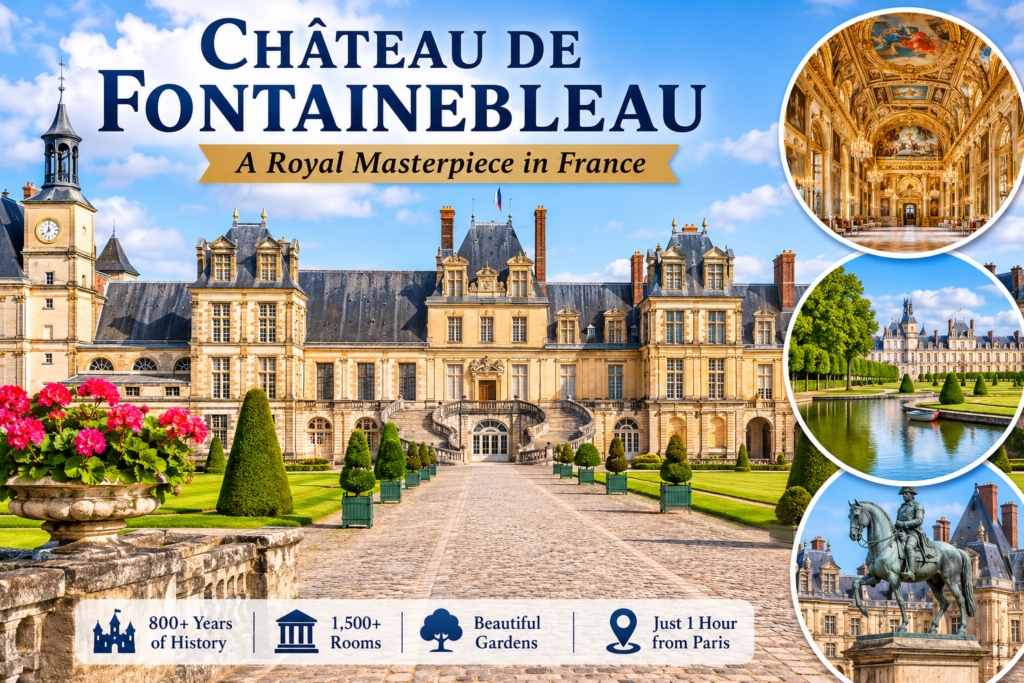
Table of Contents
- Why Visit Château de Fontainebleau
- History and Architectural Highlights
- How to Reach Château de Fontainebleau
- Visitor Tips and Essential Information
- Best Hotels Near Château de Fontainebleau
- Conclusion
Why Visit Château de Fontainebleau
Many visitors focus on Paris attractions first. However, Château de Fontainebleau offers a unique experience away from the crowds.
The palace served French monarchs for over eight centuries. As a result, visitors can see architectural styles from different periods in one location. Kings and emperors continuously expanded the estate, creating a remarkable blend of Renaissance, Classical, and Imperial design.
The palace contains more than 1,500 rooms. Therefore, it is among the largest royal residences in Europe. Highlights include:
The Grand Apartments
The royal apartments showcase luxurious furniture, paintings, and decorations. Each room reflects the tastes of different rulers.
Napoleon’s Apartments
Napoleon Bonaparte left a strong mark on Château de Fontainebleau. Visitors can explore his private apartments and ceremonial rooms.
The Horseshoe Staircase
This iconic staircase stands at the palace entrance. It remains one of the most photographed features of the estate.
Magnificent Gardens
The gardens cover a vast area and provide peaceful walking paths. During warmer months, visitors can enjoy boating and outdoor activities.
Because of its scale and beauty, Château de Fontainebleau often surprises travelers who expect a simple day trip from Paris.
History and Architectural Highlights
The story of Château de Fontainebleau began in the Middle Ages. Over time, French rulers transformed a hunting lodge into a grand palace.
Renaissance Influence
King Francis I played a major role in developing the palace. He invited Italian artists and architects to France. Consequently, Fontainebleau became a center of Renaissance art and culture.
Many historians consider the palace an important bridge between Italian Renaissance traditions and French artistic development.
Royal Residence for Centuries
Unlike many royal palaces, Château de Fontainebleau remained continuously occupied by French rulers.
Important residents included:
- Francis I
- Henry II
- Louis XIII
- Louis XV
- Louis XVI
- Napoleon Bonaparte
Because so many rulers lived here, visitors can observe changing artistic styles throughout the palace.
Napoleon’s Farewell
One of the most significant events in French history occurred at Château de Fontainebleau in 1814.
After his abdication, Napoleon delivered his emotional farewell speech to the Imperial Guard in the Courtyard of Honor. Today, visitors can stand in the same location and imagine this historic moment.
UNESCO Recognition
UNESCO designated Château de Fontainebleau as a World Heritage Site because of its outstanding cultural significance. The palace remains one of France’s most important historical treasures.
How to Reach Château de Fontainebleau
Fortunately, reaching Château de Fontainebleau is simple for international visitors.
From Paris
The easiest route starts at Gare de Lyon station in Paris.
- Take a train to Fontainebleau-Avon.
- Travel time is approximately 40 minutes.
- Use a local bus or taxi to reach the palace.
Many travelers choose a day trip. However, spending one or two nights nearby allows more time to explore the region.
By Car
Driving offers flexibility and access to nearby attractions.
The journey from central Paris usually takes about one hour, depending on traffic conditions.
Currency Information
France uses the Euro (€).
Travelers who trade cryptocurrency or need exchange calculations can use this helpful USDT calculator:
Local Transportation
The town of Fontainebleau is pedestrian-friendly. Therefore, visitors can comfortably explore on foot after arriving.
Visitor Tips and Essential Information
Planning ahead can make your visit more enjoyable.
Best Time to Visit
Spring and autumn provide pleasant temperatures and fewer crowds.
Summer offers longer daylight hours. However, visitor numbers increase significantly.
Winter visits can be rewarding because the palace feels quieter and more intimate.
Safety Tips
Fontainebleau is generally safe for tourists.
Nevertheless, follow common travel precautions:
- Keep valuables secure.
- Monitor personal belongings.
- Stay aware in train stations.
- Carry copies of important documents.
Photography
Photography is permitted in many areas. However, flash photography may be restricted in certain rooms.
Always check current regulations before taking photographs.
Digital Nomad Advice
The town offers a relaxed atmosphere compared with Paris.
Many cafés provide Wi-Fi access. Consequently, digital nomads often enjoy combining sightseeing with remote work.
For additional France travel inspiration and destination guides, visit:
Cultural Etiquette
French culture values politeness.
Simple phrases such as:
- Bonjour (Hello)
- Merci (Thank you)
- Au revoir (Goodbye)
can greatly improve interactions with locals.
Best Hotels Near Château de Fontainebleau
Finding comfortable accommodation enhances the overall experience. The following properties are popular among international visitors exploring the region and nearby attractions.
1. Hotel l’Elysee Val d’Europe
This elegant hotel offers spacious rooms and excellent transport connections. Guests appreciate its convenient location and comfortable facilities.
Best for: Families and first-time visitors.
2. Grand Magic Hotel
Grand Magic Hotel combines themed design with modern comfort. The property appeals to travelers seeking a memorable stay.
Best for: Families and leisure travelers.
3. Disney Hotel Cheyenne
Inspired by the American Old West, Disney Hotel Cheyenne delivers a unique atmosphere and family-friendly amenities.
Best for: Budget-conscious families.
4. Disneyland Hotel
Disneyland Hotel represents one of the most luxurious accommodation choices in the region. Guests enjoy premium services and elegant interiors.
Best for: Luxury travelers.
5. Marriott’s Village d’Ile-De-France
This resort-style property provides spacious villas, recreational facilities, and a peaceful environment.
Best for: Extended stays and groups.
6. Disney Davy Crockett Ranch
Nature lovers often choose Disney Davy Crockett Ranch because of its woodland setting and self-catering options.
Best for: Families seeking privacy.
7. Disney Sequoia Lodge
Disney Sequoia Lodge features a warm atmosphere inspired by American national parks.
Guests enjoy comfortable accommodations and excellent recreational facilities.
Best for: Couples and families.
Choosing the Right Hotel
When selecting accommodation, consider:
- Transportation options
- Family requirements
- Budget
- Length of stay
- Desired amenities
Many travelers combine a visit to Château de Fontainebleau with several days exploring the greater Paris region.
Conclusion
This place stands among France’s most remarkable historical landmarks. Its royal apartments, magnificent gardens, Renaissance art, and Napoleonic history create an unforgettable visitor experience. Moreover, the palace offers a calmer alternative to many crowded attractions near Paris. Whether you plan a day trip or a longer stay, Château de Fontainebleau provides a fascinating journey through French history. With convenient transportation, welcoming accommodations, and rich cultural heritage, Château de Fontainebleau remains an essential destination for travelers discovering France.