
Table of Contents
- Introduction
- Where Is Tarragona Amphitheatre?
- Why Visit Tarragona Amphitheatre?
- A Brief History of Tarragona Amphitheatre
- Best Things to Do Near Tarragona Amphitheatre
- Where to Stay Near Tarragona Amphitheatre
- How to Get Around Tarragona
- Safety, Currency, and Practical Travel Tips
- What to Eat in Tarragona
- Best Time to Visit Tarragona
- Frequently Asked Questions
- Final Thoughts
Introduction
The Tarragona Amphitheatre is one of the most remarkable reminders of Roman life on Spain’s Mediterranean coast. Built during the Roman period, the ancient arena occupies a dramatic position overlooking the sea and forms part of the archaeological ensemble of ancient Tarraco.
Today, the amphitheatre is one of Tarragona’s most recognizable landmarks and an essential stop for travelers interested in Roman history, archaeology, architecture, and Mediterranean culture. Its location also makes it easy to combine a visit with Tarragona’s historic center, Roman monuments, waterfront, beaches, museums, and traditional restaurants.
Unlike destinations that require several days to understand, Tarragona is relatively compact and easy to explore. Visitors can walk between many major attractions, enjoy the atmosphere of the old town, and finish the day beside the Mediterranean.
This Tarragona Amphitheatre travel guide covers the site’s history, the best things to do nearby, recommended places to stay, transportation, food, safety advice, and practical information to help you plan your trip.
Where Is Tarragona Amphitheatre?
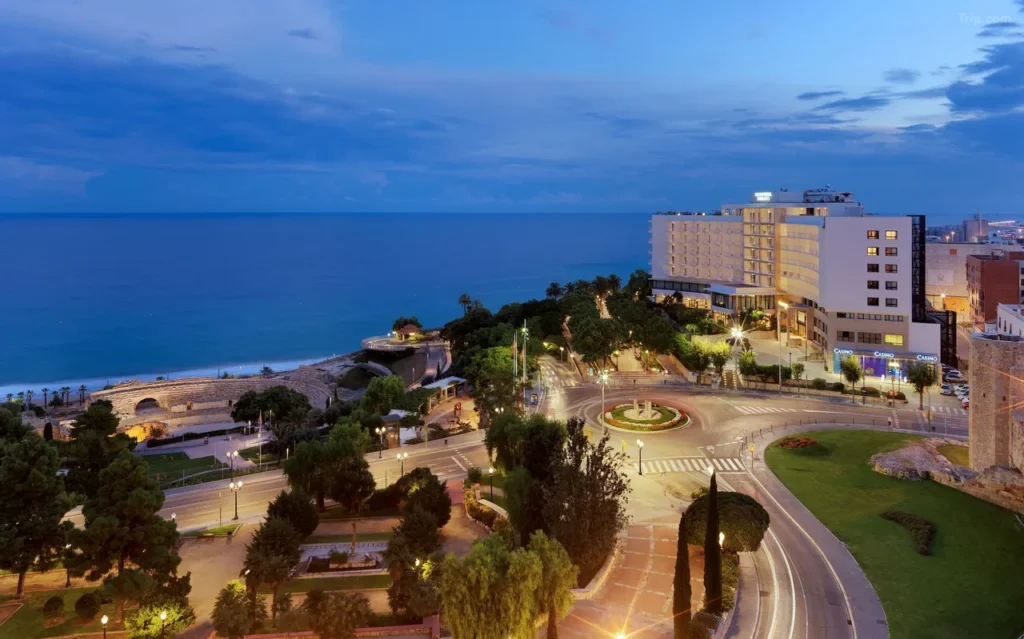
Tarragona Amphitheatre is located in Tarragona, Catalonia, on Spain’s northeastern Mediterranean coast. The monument sits just outside the historic center, overlooking the sea and close to Tarragona’s Roman archaeological sites.
The amphitheatre’s location is particularly convenient because several major attractions are clustered around the old city. Visitors can combine their archaeological visit with a walk through the historic streets, a stop at the Roman Circus, a visit to the National Archaeological Museum of Tarragona, and time at the waterfront.
Tarragona is also well positioned for travelers exploring Catalonia. Barcelona is within easy reach by train, while the surrounding Costa Daurada provides opportunities for beach trips, wine tourism, and family attractions.
Why Visit Tarragona Amphitheatre?
Tarragona Amphitheatre is worth visiting because it offers a rare combination of Roman history and Mediterranean scenery. Instead of being surrounded entirely by modern buildings, the ancient structure sits against a coastal backdrop, giving the site a distinctive atmosphere.
Here are some of the main reasons to include it in your itinerary:
- Explore one of Tarragona’s most important Roman monuments.
- Learn about ancient Roman entertainment and public life.
- Enjoy views toward the Mediterranean Sea.
- Combine the visit with Tarragona’s other archaeological attractions.
- Walk through the historic old town afterward.
- Experience Catalan food and local markets.
- Stay close to both historic landmarks and the waterfront.
- Use Tarragona as a base for exploring the wider Costa Daurada.
The amphitheatre is especially appealing to travelers who enjoy combining sightseeing with a relaxed coastal holiday.
A Brief History of Tarragona Amphitheatre
The amphitheatre was constructed during the Roman period when Tarragona was known as Tarraco, one of the most important Roman cities in Hispania.
Its position near the sea was carefully chosen, while its location outside the main urban area allowed large public gatherings to take place. The arena was used for spectacles and public events that formed part of Roman entertainment culture.
Over the centuries, the site experienced periods of abandonment, reuse, and transformation. Parts of the structure were incorporated into later buildings and religious development, reflecting the changing history of Tarragona.
Today, the surviving stone structures provide visitors with a fascinating glimpse into the city’s Roman past. Together with other archaeological remains around Tarragona, the amphitheatre demonstrates why the ancient city has such an important place in European Roman heritage.
The amphitheatre forms part of the Archaeological Ensemble of Tarraco, recognized as a UNESCO World Heritage Site.
Best Things to Do Near Tarragona Amphitheatre
A visit to the amphitheatre does not need to take up an entire day. The surrounding historic district contains numerous attractions that can easily be combined into a walking itinerary.
Explore the Tarragona Roman Circus
The Roman Circus is one of the city’s most impressive archaeological sites. It once hosted chariot races and other public spectacles and remains an important part of Tarragona’s Roman heritage.
Walking through the surviving sections gives visitors a better understanding of the enormous scale of Roman public architecture.
Visit Tarragona Cathedral
Tarragona Cathedral stands in the heart of the historic quarter and represents a completely different chapter of the city’s history.
Its architecture combines several styles developed over centuries, while the surrounding streets provide a peaceful setting for exploring the old town.
Discover the National Archaeological Museum
For visitors who want more context about the Roman remains, the archaeological museum is an excellent addition to the itinerary.
Its collections help explain how Tarraco developed and provide greater insight into Roman daily life, art, architecture, and culture.
Walk Through the Old Town
Tarragona’s historic center is best experienced slowly. Narrow streets, stone buildings, small plazas, churches, cafés, and local shops create an atmosphere that is very different from the city’s modern districts.
Allowing time to wander without a fixed route is one of the easiest ways to discover the character of Tarragona.
Enjoy the Mediterranean Waterfront
After exploring Roman ruins, head toward the waterfront for a change of scenery.
The Mediterranean coastline provides opportunities for relaxing walks, photography, and sunset views. The contrast between ancient stone architecture and the blue sea is one of Tarragona’s defining characteristics.
Relax at a Nearby Beach
Travelers who want to combine history with a beach holiday can easily add some seaside time to their Tarragona itinerary.
Several beaches in and around the city provide opportunities for swimming, sunbathing, and relaxing after a morning of sightseeing.
Explore Local Markets and Plazas
Tarragona’s markets and public squares offer a chance to experience contemporary Catalan life beyond the major monuments.
Look for regional produce, pastries, cheeses, wines, and other local specialties while taking a break from sightseeing.
Where to Stay Near Tarragona Amphitheatre
Tarragona has accommodation ranging from full-service city hotels to resorts and practical budget properties. The best choice depends on whether your priority is historic sightseeing, beach access, family activities, or convenience.
1. H10 Imperial Tarraco
H10 Imperial Tarraco is one of the most convenient upscale choices for travelers who want to stay close to Tarragona’s historic attractions and waterfront.
The property offers contemporary guest rooms, leisure facilities, and views that take advantage of its coastal location. Its position makes it particularly attractive for visitors who want to combine sightseeing with a comfortable hotel experience.
It is a strong option for couples and travelers looking for a higher-end base within easy reach of the amphitheatre and Tarragona’s old town.
2. Hotel SB Ciutat Tarragona
Located near Plaça Imperial Tàrraco, Hotel SB Ciutat Tarragona provides a practical urban base for exploring the city.
The hotel offers modern rooms, fitness facilities, and convenient access to transportation and surrounding neighborhoods. Its location works well for travelers who want to explore Tarragona on foot while still having easy access to other parts of the city.
It is particularly suitable for business travelers, couples, and visitors planning a short city break.
3. Hotel SB Express Tarragona
Hotel SB Express Tarragona is a practical choice for travelers who value modern accommodation and straightforward city access.
Its rooms are designed around comfort and functionality, making the property suitable for both short stays and longer visits. The location also provides convenient connections for travelers arriving by car or public transportation.
Families and independent travelers looking for a reliable modern hotel may find this option particularly useful.
4. Hotel MR
Hotel MR offers a more affordable alternative for travelers who want to keep accommodation costs under control.
The property provides straightforward rooms and convenient access to transportation, making it useful for visitors who plan to spend most of their time exploring Tarragona rather than staying at the hotel.
It can be a good choice for budget-conscious travelers, road-trippers, and visitors looking for a practical base outside the busiest historic streets.
5. PortAventura Hotel Gold River
For families planning to combine Tarragona sightseeing with a visit to PortAventura World, Hotel Gold River provides a themed resort experience.
The property is designed around a Wild West-inspired setting and offers a range of family-oriented facilities. Its location makes it more suitable for travelers who want a theme-park vacation alongside their Tarragona trip rather than those who want to stay directly beside the amphitheatre.
Families with children may find it particularly appealing.
6. PortAventura Hotel Colorado Creek
PortAventura Hotel Colorado Creek offers another resort-style option for families and theme-park visitors.
Its design draws inspiration from the American frontier, while the property provides comfortable accommodation and access to the wider PortAventura resort complex.
It works best as part of a broader Costa Daurada itinerary that includes PortAventura rather than as a traditional Tarragona city-center hotel.
7. PortAventura Hotel
PortAventura Hotel provides convenient accommodation for visitors making the theme park the centerpiece of their trip.
The property has a Mediterranean-inspired atmosphere and gives guests convenient access to PortAventura’s entertainment facilities. Travelers can combine a few days at the resort with a separate day exploring Tarragona’s Roman heritage.
For families, this can create a balanced itinerary combining theme-park entertainment, historic sightseeing, and coastal relaxation.
How to Get Around Tarragona
Tarragona is relatively easy to explore, particularly around the historic center. Many of the main Roman monuments are close enough to visit on foot.
Walking is often the best way to experience the old town because narrow historic streets and pedestrian areas can make driving inconvenient.
For longer journeys, visitors can use:
- Local buses
- Taxis
- Regional trains
- Rental cars
- Intercity buses
Barcelona-El Prat Airport is the main international gateway for many overseas travelers. From Barcelona, Tarragona can be reached by train, bus, or car.
A rental car becomes more useful if you plan to explore the Costa Daurada, nearby beaches, wine-producing areas, or smaller towns outside Tarragona.
For a city-focused itinerary, however, a car is generally unnecessary.
Safety, Currency, and Practical Travel Tips
Tarragona is a popular destination for international visitors and is generally straightforward to navigate. As with other major Spanish tourist destinations, travelers should remain aware of their belongings in crowded areas.
Keep these practical points in mind:
- Spain uses the Euro (€).
- Credit and debit cards are widely accepted.
- Carry some cash for smaller businesses and local markets.
- Keep valuables secure in crowded tourist areas.
- Wear comfortable shoes for walking on historic streets.
- Bring sun protection during the warmer months.
- Carry water when sightseeing during summer.
- Check attraction opening hours before visiting.
- Allow extra time for outdoor attractions during hot weather.
Pharmacies are widely available in urban areas, and Tarragona has established healthcare services for residents and visitors.
Tipping is not mandatory in Spain, although a small amount is appreciated when you receive particularly good service.
What to Eat in Tarragona
Tarragona’s culinary identity is strongly connected to Catalonia and the Mediterranean. Seafood, fresh produce, olive oil, local wines, and traditional sauces play an important role in regional cooking.
Romesco
Romesco sauce is strongly associated with Tarragona and the surrounding region. Made using ingredients such as roasted peppers, nuts, garlic, and olive oil, it is commonly paired with seafood and vegetables.
Seafood and Rice Dishes
Given Tarragona’s coastal location, seafood is an obvious choice. Local restaurants offer a variety of Mediterranean dishes featuring fish, shellfish, and rice.
Catalan Cuisine
Travelers should also look for traditional Catalan dishes, seasonal vegetables, cured meats, cheeses, and hearty regional recipes.
Local Wine
The wider Tarragona region is surrounded by important wine-producing areas. Wine lovers can explore local varieties and consider visiting vineyards as part of a longer Costa Daurada itinerary.
Traditional Desserts
Finish your meal with a Catalan pastry or traditional sweet from a local bakery. Exploring independent bakeries can be a rewarding part of discovering the city’s food culture.
Best Time to Visit Tarragona
Tarragona can be enjoyed throughout the year, but the ideal season depends on your travel priorities.
Spring
Spring offers comfortable temperatures for walking and sightseeing. It is an excellent period for exploring Roman monuments and enjoying outdoor cafés without the peak summer heat.
Summer
Summer is ideal for travelers who want to combine history with beach time. Long daylight hours make it possible to explore the amphitheatre in the morning, relax by the sea in the afternoon, and enjoy dinner outdoors.
However, popular attractions can become busier during the peak season.
Autumn
Autumn provides pleasant sightseeing conditions and a more relaxed atmosphere. It is particularly appealing for travelers interested in food, wine, and cultural exploration.
Winter
Winter is the quietest period for tourism. Although beach activities are more limited, the Roman monuments, museums, historic streets, and restaurants remain attractive.
For travelers primarily interested in history and architecture, winter can offer a more peaceful experience.
Frequently Asked Questions
Is Tarragona Amphitheatre worth visiting?
Yes. The amphitheatre is one of Tarragona’s most important Roman landmarks and offers an unusual combination of archaeological remains and Mediterranean scenery.
How long should I spend at Tarragona Amphitheatre?
Around one hour is generally enough to appreciate the monument itself, but you should allow several hours if you plan to combine it with the Roman Circus, cathedral, old town, museums, and waterfront.
Can I visit Tarragona Amphitheatre as a day trip?
Yes. Tarragona is well suited to a day trip, particularly from Barcelona. However, staying overnight allows you to experience the historic center after the busiest daytime period and explore more of the surrounding attractions.
Is Tarragona good for families?
Yes. Families can combine Roman history with beaches, waterfront walks, local food, and nearby attractions such as PortAventura World.
Do I need a car in Tarragona?
Not if you are primarily visiting the city. The historic center and major monuments are accessible on foot, while public transportation can cover longer journeys.
A car becomes more useful for exploring the wider Costa Daurada.
What else should I visit near the amphitheatre?
The Roman Circus, Tarragona Cathedral, archaeological museum, historic old town, waterfront, and nearby beaches are excellent additions to a Tarragona itinerary.
Final Thoughts
Tarragona Amphitheatre offers a memorable way to experience the meeting point between ancient Roman history and the modern Mediterranean coast. The surviving arena provides a fascinating glimpse into Tarraco’s past, while its seaside setting gives the experience a distinctive atmosphere that is difficult to find elsewhere.
The surrounding city makes the visit even more rewarding. Travelers can explore Roman monuments in the morning, wander through historic streets, enjoy Catalan cuisine for lunch, and finish the day beside the Mediterranean.
Accommodation options range from comfortable city hotels to family-focused resorts, allowing visitors to tailor their stay to their interests. Whether Tarragona is a short stop during a Catalonia road trip or the main destination of your holiday, the city offers enough history, culture, food, and coastal scenery to make the journey worthwhile.
For travelers looking beyond Barcelona’s busiest attractions, Tarragona provides an excellent opportunity to discover another side of Catalonia—one shaped by Roman heritage, Mediterranean landscapes, and a distinctly local way of life.